
Statewide Criminal Background Check
State Criminal Records Search
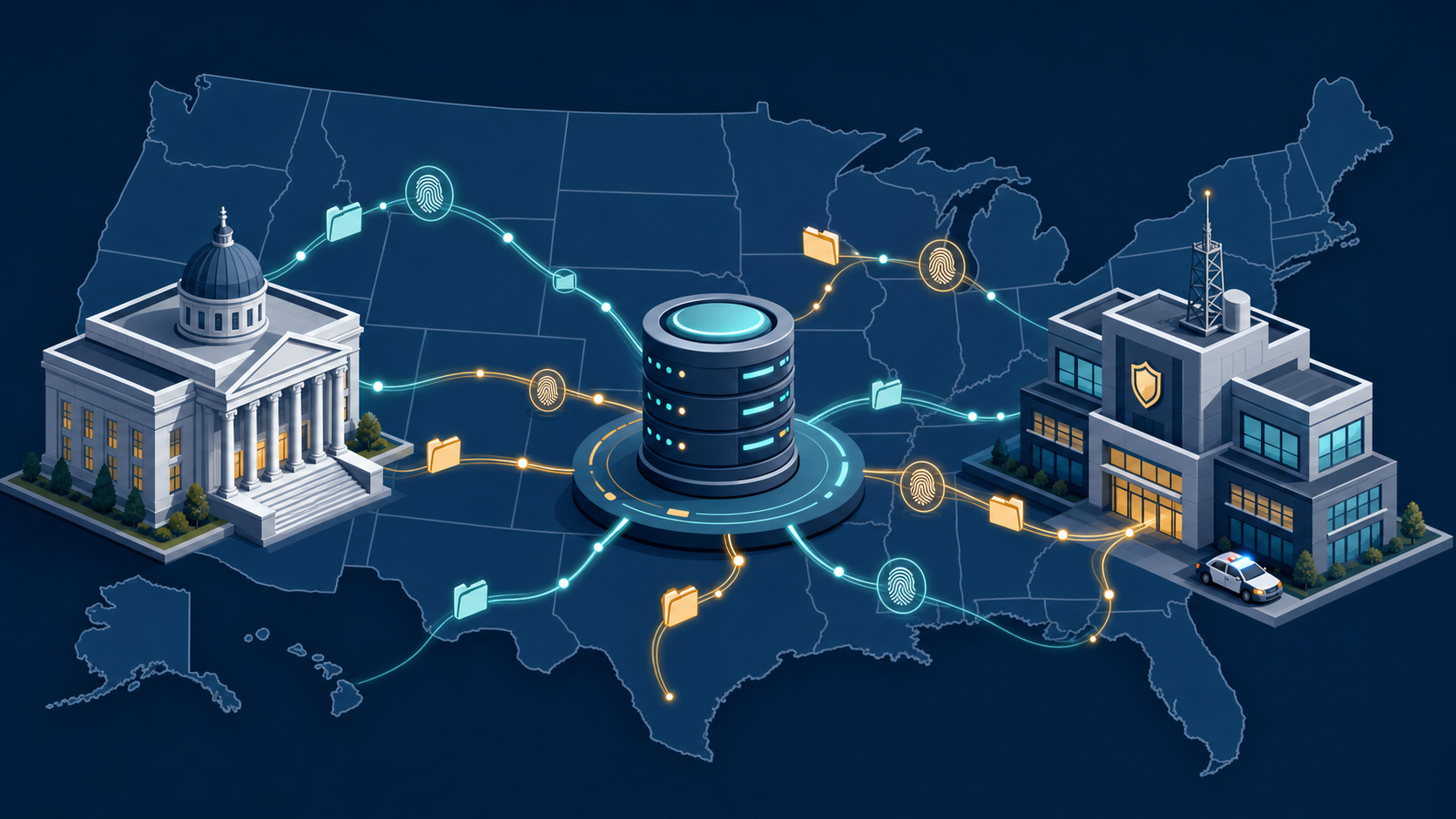
Search official state criminal records in real time. We query state law enforcement repositories and state judiciary case history directly.
- Felony and misdemeanor court cases update daily
- Sources include AOC, DPS, CJI, State Police and CBI plus other State government sources
- Turnaround runs 24 hours or less in most states
- Positive hits get verified, so they may take longer
Learn about background screening laws before you screen for hiring or renting.
FCRA-compliant screening
40+ states covered
Real-time court access
No monthly fees
Live U.S. support
How can I obtain updated criminal records from state police and courts?
You can now run a state criminal records search in real time. We connect directly to official state sources. Those sources include the Administrative Office of the Courts, the Department of Public Safety, and state police agencies. Additionally, we reach the Criminal Bureau of Investigation and state Criminal Justice Division systems.
The statewide criminal background check returns felonies and misdemeanors. Some states also report traffic citations. Therefore you see a broader picture than a single county search delivers. However, county records still add depth in many jurisdictions. Consequently, most employers pair a state search with targeted county searches.
Every state criminal repository sets its own rules. Coverage, fees and lookback periods all differ. As a result, we display any state access fee before you order. You always know the cost up front.
24 hrs
Typical turnaround in most states.
40+
States available for direct search.
Daily
Court case updates from AOC feeds.
7 yrs+
Lookback varies by state statute.
How a state criminal records search works
Four steps take you from consent to a defensible decision.
Get written consent
Give the applicant a stand-alone disclosure first. Then collect signed authorization. Therefore your file stays FCRA compliant.
Pick the states
Select every state tied to the applicant. Include past addresses, work sites and schools. Additionally, add nearby border states.
Submit identifiers
Enter full legal name and date of birth. Also list aliases and maiden names. Consequently, false negatives drop sharply.
Verify dispositions
Read each charge carefully. Then confirm the final court outcome. Never assume a filing equals a conviction.
Which state criminal repositories do we search?
Each state routes criminal history through different agencies. Therefore we map every request to the correct official source.
| State source | What it holds | Why it matters |
|---|---|---|
| Administrative Office of the Courts (AOC) | Filed criminal cases, charges and dispositions | Court data carries the final outcome, so it settles conviction questions. |
| Department of Public Safety (DPS) | Fingerprint-backed criminal history records | Prints tie a record to a person, therefore identity errors fall. |
| State Police / Bureau of Investigation (CBI, SBI) | Arrests, charges and correctional status | Arrest data arrives fast, however dispositions can lag behind. |
| Criminal Justice Information division (CJI) | Central repository submissions from local agencies | Local agencies feed this repository, so coverage depends on reporting. |
Read Before You Decide
Some state databases show arrests without a final disposition
This gap causes most bad hiring decisions. Therefore you need to understand it.
Why the disposition goes missing
Police report an arrest to the state repository quickly. The court result, however, travels a slower path. Clerks must forward the outcome, and some never do. Consequently, the repository still shows an open arrest.
The case may have ended long ago. A judge may have dismissed it. A jury may have acquitted the person. Additionally, prosecutors often reduce felonies to misdemeanors.
What you must do instead
- Order a follow-up court case search on every hit.
- Confirm the final charge disposition, not the filing.
- Verify identity with date of birth and address history.
- Document your individualized assessment in writing.
We flag missing dispositions on the report. Then our researchers pull the court file when a state allows it.
Case type can mislead you
The case type reflects the original charging document only. If that document listed any felony, the case reads as a felony. Prosecutors may have reduced or dropped every charge afterward. Therefore you should always check the final disposition first.
Legal restrictions on state criminal background checks
Three layers of law govern your screening program. Federal rules set the floor. State statutes stack on top. City ordinances add more duties. Consequently, the strictest rule controls your workflow.
FCRA duties
Screen only for a permissible purpose. Provide a stand-alone written disclosure. Then collect signed authorization. Additionally, follow the two-step adverse action process before you reject anyone.
Ban-the-box limits
Many states delay criminal questions until after a conditional offer. Others ban the question on applications entirely. Therefore you must time your state criminal search carefully.
Record type limits
States often bar sealed, expunged and juvenile records. Several cap the lookback at seven years. Some exclude non-convictions outright. Consequently, blanket exclusions create real risk.
Compliance tips for employers and landlords
- Verify identity before you take any adverse action.
- Never assume a conviction from a filed criminal case.
- Check the final disposition of every single charge.
- Apply an individualized assessment, therefore avoiding blanket bans.
- Keep consent forms and decision notes for your audit file.
Learn about background screening laws in your state and city before you order.
State criminal search coverage and pricing
Click any state below. Each page lists pricing, coverage detail, a sample report and applicable employment laws.
- Alabama
- Alaska
- Arizona
- Arkansas
- Colorado
- Connecticut
- District of Columbia
- Florida
- Georgia
- Hawaii
- Idaho
- Indiana
- Iowa
- Kansas
- Kentucky
- Maryland
- Maine
- Massachusetts
- Michigan
- Minnesota
- Missouri
- Montana
- Nebraska
- New Jersey
- New Mexico
- New York
- North Carolina
- North Dakota
- Oklahoma
- Oregon
- Pennsylvania
- Rhode Island
- South Carolina
- South Dakota
- Tennessee
- Texas
- Utah
- Virginia
- Washington
- Wisconsin
Do not see your state? Contact us, because we also run county and federal searches nationwide.
State criminal search vs. national database search
Both tools help, yet they serve different jobs. Use them together for the strongest result.
Statewide criminal records search
- Pulls from official state repositories and courts.
- Reports charges plus final dispositions.
- Supports FCRA-compliant hiring decisions.
- Updates daily in real-time court states.
National criminal database search
- Aggregates mined data from mixed jurisdictions.
- Coverage gaps appear by state and county.
- Works as a pointer tool, not proof.
- Requires verification before any adverse action.
Treat the national database as a supplement only. It should never decide a hire on its own. Additionally, some jurisdictions no longer release records to data vendors. Therefore gaps remain permanent. Confirm every hit at the state or county level first.
Frequently asked questions
What is a state criminal records search?
A state criminal records search queries one state’s official criminal history sources. Those sources include the AOC, the DPS, the State Police and the State Bureau of Investigation.
Therefore the search returns felony and misdemeanor case history statewide, not just one county. Additionally, some states report traffic citations and pending cases. County searches still dig deeper, so many employers run both together.
How long does a statewide criminal background check take?
Most state criminal searches return in 24 hours or less. Real-time court systems often answer within minutes.
However, a positive hit takes longer. A researcher must verify identifiers and pull the final disposition. Additionally, some agencies process requests manually on business days only. Consequently, plan extra time when a record appears.
Do state criminal records show arrests without a final disposition?
Yes. Some state databases contain an arrest with no final disposition attached. The arresting agency reports the arrest quickly. The court result, however, may never reach the state repository.
Consequently, the record can look open after a dismissal, an acquittal or a reduced charge. Never treat a filed charge as a conviction. Therefore verify the disposition at the court of record first.
Is a state criminal search better than a national criminal database search?
A state criminal search pulls from official state sources, so it carries stronger accuracy. A national database, by contrast, aggregates mined data from many jurisdictions.
Coverage therefore varies by state, county and update schedule. Additionally, some jurisdictions stopped sharing records entirely. Use the national database as a pointer tool only. Then confirm every hit before you decide.
What legal restrictions apply to state criminal background checks?
Federal, state and local rules apply at once, and the strictest rule wins. The FCRA requires a stand-alone disclosure, written consent and two-step adverse action.
Additionally, ban-the-box laws delay criminal questions until after a conditional offer. Many states also cap lookbacks and bar sealed records. Therefore confirm your state and city rules first. Learn about background screening laws here.
Start your state criminal records search today
Open an account in minutes and get immediate access. Pay as you go, therefore you only fund what you order.
No setup fees apply. No minimums apply. No monthly recurring fees apply for credit card customers. Additionally, we serve credentialed business use only.